
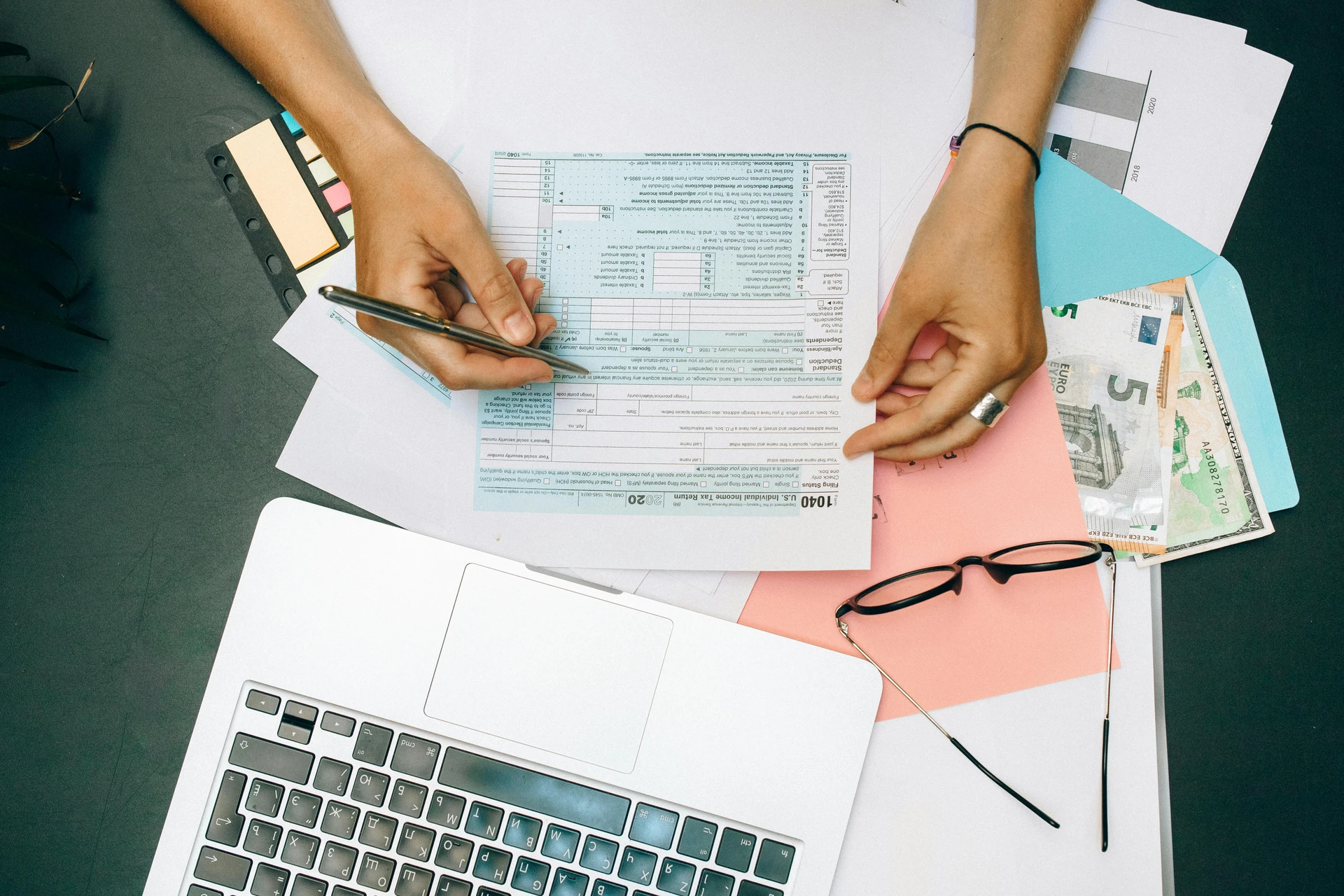
How Foreign Business Trip Tax Rules Have Changed
Starting January 1, 2025, the Federal Tax Service introduced mandatory marking of expense reports with operation codes for trips to EAEU countries and beyond. According to Ministry of Finance data from December 2024, the error rate in foreign travel reporting rose to 23%, leading to additional personal income tax and insurance premium assessments totaling over 4.2 billion rubles for the nine months of 2024.
In 2026, companies face three key changes: new per diem limits for high-inflation countries, stricter control over expense documentation, and automatic tax information exchange with 78 countries under the CRS standard.
Per Diems: When Taxable Income Arises
Per diems for foreign business trips are not subject to personal income tax and insurance premiums within the limit of 2,500 rubles per day. Any amount exceeding this limit automatically becomes taxable income.
Calculation example: an employee spent 7 days in Germany, and the company paid per diems of 3,000 rubles per day. The excess amount equals (3,000 − 2,500) × 7 = 3,500 rubles. This amount requires withholding 13% personal income tax (455 rubles) and charging insurance premiums at 30% (1,050 rubles for the employer).
An important detail: the day of border crossing is determined by the passport stamp or boarding pass if entry is visa-free. If an employee departed Moscow on March 15 at 23:30 and landed in Dubai on March 16 at 06:20, per diems for March 15 are paid at the domestic rate (up to 700 rubles tax-free), and from March 16 onward at the foreign rate.
Accommodation and Transport: What Qualifies for Deduction
Hotel expenses are fully deductible with supporting documents in a foreign language accompanied by a notarized translation or apostille. Since 2025, the Federal Tax Service requires hotel invoices to show the business traveler's name, not the company name.
Real case: a manufacturing company from Yekaterinburg sent an engineer to an exhibition in China. Hotel booking was made through a corporate platform under the legal entity's name. During a desk audit, the tax authority rejected the 87,000 ruble expense because the invoice lacked the employee's name. The company had to pay additional insurance premiums and penalties.
Airline tickets are accepted at actual cost, including airport fees and fuel surcharges. If an employee flew business class, the full expense can be claimed, but only if local regulations (travel order or policy) specify criteria: flight duration over 4 hours, position no lower than department director, or medical indications.
Personal Income Tax on Expense Reimbursement: Hidden Tax Risks
Reimbursement for mobile communications, taxi, and entertainment expenses abroad is subject to personal income tax if primary documents are missing. The tax authority accepts receipts from Uber or Bolt apps only if they show route, date, time, and amount in foreign currency.
According to audit firm Pepeliaev Group data for 2024, 61% of disputes with the Federal Tax Service over foreign business trips involve taxi and meal reimbursements. If an employee lost a receipt or paid cash without documentation, that amount must be included in income and taxed.
Entertainment expenses are a separate matter. A dinner with a client at a Paris restaurant costing 450 euros can be claimed as a profit tax deduction within 4% of annual payroll, but only with an entertainment expense report listing meeting participants, negotiation purpose, and outcome.
Insurance Premiums: When Per Diems Become Salary
If a business trip lasts more than 60 consecutive calendar days, the Federal Tax Service may reclassify per diems as salary and assess additional premiums. This risk arises when an employee actually works on a permanent basis at a foreign office or site.
Precedent: an IT company sent a developer to Armenia for 90 days to configure servers. They paid per diems of 2,500 rubles daily. The tax authority determined this was not a business trip but a temporary transfer, and assessed premiums on the entire per diem amount (225,000 rubles) plus penalties. The company lost in court because the employment contract lacked provisions for travel-based work.
To avoid this: formalize long trips as temporary transfers with employment contract amendments, or split the trip into several periods with return to Russia for at least 3-5 working days.
Documentation Requirements: 2026 Checklist
The mandatory document package for foreign business trips includes:
- Travel order specifying country, city, dates, and trip purpose.
- Official assignment (form T-10a) - formally abolished, but the Federal Tax Service requires it in disputes.
- Expense report with all receipts, invoices, and boarding passes attached.
- Work completion report - free format, but with specific results (signed contract, meeting minutes, acceptance certificate).
- Copy of passport with entry-exit stamps or electronic registration printout.
Since 2025, trips to Belarus, Kazakhstan, Armenia, and Kyrgyzstan do not require passport stamps. Proof consists of boarding passes, hotel bookings, and receipts with geolocation.
Currency Control and Fund Repatriation
If an employee withdrew cash from a corporate card abroad or received an advance in foreign currency, they must report within 10 working days after return. Unspent balance must be returned to the cash desk or company account.
Currency conversion rate: on the date the expense report is approved by management, not the spending date. If the euro cost 98 rubles when buying a ticket but 102 rubles on report approval date, accounting reflects the expense at 102 rubles. The 4-ruble difference per currency unit creates an exchange difference that goes to other expenses.
Example: an employee spent 1,200 euros in Italy. Exchange rate on purchase dates - 99 rubles, on report approval date - 103 rubles. Recorded expense equals 1,200 × 103 = 123,600 rubles. Actually spent 1,200 × 99 = 118,800 rubles. Exchange difference of 4,800 rubles reduces profit tax.
VAT on Foreign Business Trips: Can You Claim a Deduction
Services from foreign hotels, restaurants, and taxis are not subject to Russian VAT. No deduction is available for these expenses. Exception: tickets on Russian airline flights. If the Moscow-Berlin-Moscow route is operated by Aeroflot, 20% VAT can be claimed with an electronic ticket and boarding passes.
If a company rented a car abroad through a Russian intermediary (for example, through an agency with a contract on Russian territory), 20% VAT in the rental cost can be claimed, but only if the agency issued a proper invoice under Russian Tax Code rules.
Double Taxation: How to Recover Withheld Tax
If an employee worked abroad more than 183 days within 12 months, they may become a tax resident of another country. Then their income is taxed both there and in Russia.
Russia has signed double taxation avoidance agreements with 84 countries. To credit tax paid abroad, obtain a Tax Residency Certificate from the foreign tax service and submit an application to the Federal Tax Service at your registration location.
Refund period: up to 12 months from submission of complete documents. In practice, the process takes 6-8 months. If the employee resigned before the refund, the amount can be returned to their personal account upon application.
Sanctions Risks and Payment Restrictions
Since February 2022, payment for services in several countries with Russian bank cards has been blocked. Employees must use foreign bank cards or cash. This creates tax risk: if a company transferred an advance to a personal foreign bank card, the Federal Tax Service may consider it income payment rather than travel advance.
Safe scheme: open a corporate card at a bank in the destination country (for example, Kazakhstan or UAE) and transfer funds there marked "advance for business travel expenses." The employee reports under general rules, but the expense goes through the company's foreign account.
Accounting Automation: How to Reduce Error Risk
Companies with more than 15 foreign business trips per quarter are switching to corporate travel management platforms. Such systems automatically collect receipts, verify per diem limits, generate expense reports, and integrate with 1C.
Based on GetOffers client experience, automation reduces processing time for one expense report from 45 minutes to 8 minutes. Errors in personal income tax and premium calculations drop by 87% because the system automatically applies current limits and exchange rates.
Additional benefit: the system stores electronic copies of all documents in the cloud and provides access to auditors or tax authorities upon request in 2-3 minutes instead of hours of archive searching.
Common Errors Leading to Additional Assessments
Error #1: paying per diems for departure and arrival days at the foreign rate when the employee crossed the border in the evening or at night. The departure day from Russia before border crossing is paid at the 700-ruble rate.
Error #2: missing hotel invoice translation. Notarized translation is not mandatory if the document is in English and contains all details (date, amount, guest name, hotel name, stamp). But for documents in Chinese, Arabic, or Turkish, translation is required.
Error #3: including meal expenses in per diems. Per diems are a fixed amount for personal needs. If the company additionally pays for breakfasts or lunches, these expenses go as a separate line and are subject to personal income tax if not related to entertainment purposes.
Error #4: missing order recalling from business trip for early return. If an employee returned 2 days early but per diems were paid for the full period, the difference must either be returned to the cash desk or personal income tax withheld on the "extra" days' amount.
How to Prepare for Federal Tax Service Audit
The tax authority requests foreign business trip documents first if:
- Business trip expense share exceeds 5% of payroll.
- One employee travels on business more than 8 times per year.
- Per diems are paid at the maximum non-taxable level (2,500 rubles) to all employees without exception.
Before an audit, verify:
- All orders are signed by management and dated before the trip start date.
- Expense reports contain no corrections or erasures.
- Receipt amounts match report amounts considering exchange rate on approval date.
- Documents confirming business purpose exist: contract with foreign counterparty, exhibition invitation, conference program.
If the trip was to a country with no double taxation avoidance agreement with Russia (for example, UAE before 2023), prepare personal income tax calculation at 13% or 15% depending on employee status.
2026 Changes: What the Legislature Is Preparing
The Ministry of Finance developed a draft amendment to the Tax Code that may take effect from July 2026. Plans include introducing differentiated per diem limits by country: for high-cost countries (Switzerland, Norway, Iceland) the limit may rise to 3,500 rubles; for others it remains 2,500 rubles.
Mandatory electronic business trip registration in the taxpayer's personal account 3 days before departure is also under discussion. This will allow the Federal Tax Service to cross-check border crossing data with information from the FSB Border Service automatically.
The third change concerns reporting: starting 2027, expense reports for foreign business trips must be submitted to the tax authority electronically through an electronic document management operator within 5 days of approval. Paper reports will no longer be accepted.
FAQ
What per diem amount is not subject to personal income tax for foreign business trips in 2026?
2,500 rubles for each day spent abroad. The excess amount is subject to 13% personal income tax and 30% insurance premiums. The border crossing day is determined by passport stamp or boarding pass.
Is notarized translation of a foreign hotel invoice required?
Notarized translation is not required if the document is in English and contains all mandatory details: date, amount, business traveler's name, hotel name, and stamp. For documents in other languages (Chinese, Arabic, Turkish), translation is mandatory.
Can VAT be claimed on foreign flight tickets?
Yes, if the carrier is a Russian airline. 20% VAT is deductible with an electronic ticket and boarding passes. Foreign airline services are not subject to Russian VAT; no deduction is available.
What to do if a business trip lasts more than 60 days?
For trips exceeding 60 calendar days, the Federal Tax Service may reclassify per diems as salary and assess insurance premiums. It's safer to formalize as a temporary transfer with employment contract amendment or split the trip into several periods with return to Russia for at least 3-5 working days.
What exchange rate should be used to convert foreign currency expenses in the expense report?
The Central Bank of Russia rate on the date the expense report is approved by management, not the actual spending date. The difference between purchase rate and approval rate creates an exchange difference allocated to other income or expenses.
What documents are mandatory to confirm a foreign business trip?
Travel order, expense report with receipts and invoices, passport copy with stamps (or boarding passes for visa-free countries), work completion report with specific results. For EAEU countries there are no stamps - proof consists of tickets and receipts with geolocation.
Ready to automate business travel?
GetOffers — AI platform for corporate travel management. Save 15–30% on business travel.
Related posts
Business Trip Budget Optimisation: 7 Strategies for 2026
Cut business travel costs by 18–34% without sacrificing quality. Proven budget optimisation strategies with concrete figures and implementation examples.

Per Diem vs Actual Expense: Choosing a Reimbursement Method in 2026
Comparing per diem and actual expense: tax implications, hidden accounting costs, and real savings for companies with varying business travel volumes.

One-Day Business Trips: Processing, Expenses & Accounting
A breakdown of documentation, per diem calculations, and tax nuances for one-day business trips without overnight stays. Ready-made checklists and examples for accounting.

Sustainable Corporate Travel Program: 2026 Implementation
Step-by-step plan for implementing green booking criteria with cost calculations, policy examples, and TMC integration. Ready solutions for travel managers.

Short vs Multi-Day Business Trips: Duration Changes in 2026
Real data analysis reveals how business trip duration shifted in 2026. Numbers, reasons, and practical recommendations for optimizing corporate travel.

Employee Safety on Business Trips: Why Travelers Ignore Risks
Why do 68% of business travelers not know how to act in an emergency abroad? We examine real risks and concrete steps to protect personnel.