
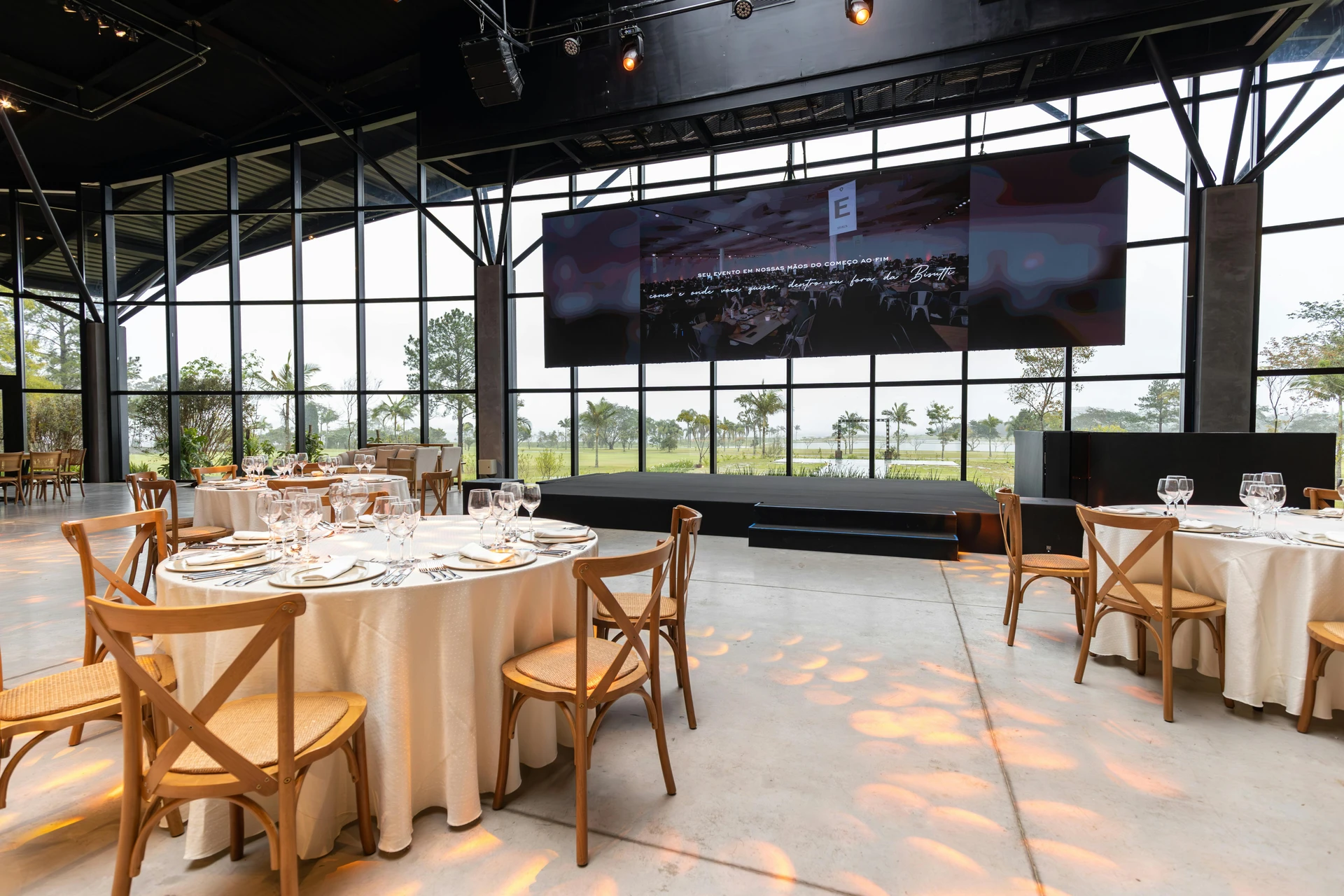
What Has Changed in MICE Event Planning by 2026
The corporate events market has weathered three crises over the past six years. According to Allied Market Research (2024), the global MICE industry reached $1.24 trillion and continues growing at 7.8% annually. Yet the requirements for organisers have changed dramatically.
Today companies expect more than a contractor who books a hotel and orders catering. Clients demand a unified platform where they can manage the entire cycle: from initial request and budget approval to post-event ROI analytics. This applies to conferences for 500 people, off-site strategic sessions for 15 top managers, and hybrid formats with thousands of online participants.
The main shift has occurred in data. Where organisers in 2020 worked with Excel spreadsheets and fragmented booking systems, integration with corporate ERP, CRM, and expense management systems became standard in 2026. Companies want to see how much each participant costs, which sessions generate maximum engagement, and how the event affects business metrics.
Five Stages of Full-Cycle MICE Planning
Stage 1: Strategic Planning and Budgeting
Start not with venue search but with defining business goals. What problem does the event solve: product launch, team training, strengthening corporate culture, or attracting clients? The answer determines everything: format, duration, participant composition, and KPIs.
Example: An IT company with 800 employees planned an annual conference in Sochi. Instead of the traditional two-day format, organisers split the event into three modules: a strategic session for 50 executives (two days), a product conference for 200 specialists (one day), and an online broadcast for the rest. Savings reached 28% of budget while engagement grew 34% according to surveys.
Budgeting in 2026 requires itemisation down to individual expense categories. Typical distribution for a corporate conference of 150 people:
- Venue and technical equipment: 25-30%
- Participant accommodation: 20-25%
- Catering and coffee breaks: 15-18%
- Logistics (transfers, flights): 12-15%
- Speakers and content: 8-12%
- Contingency expenses: 5-7%
Key mistake: allocating a reserve below 5%. According to Meetings & Conventions (2025) statistics, 67% of events exceed initial budget due to programme changes, currency fluctuations, or service price increases.
Stage 2: Format and Venue Selection
Hybrid events have stopped being a trend and become the norm. The Bizzabo Event Experience Report (2025) showed that 73% of companies run events in mixed format, even when the main audience attends offline. The reason: ability to attract speakers from other countries, reduce carbon footprint, and reach employees from regional offices.
When selecting a venue, consider more than capacity and price. Critical parameters for 2026:
Technological readiness. Stable internet at speeds from 100 Mbps, ability to connect proprietary equipment for broadcasts, backup communication channels. Check this during site inspection, not the day before the event.
Space flexibility. Conference halls with modular partitions allow quick configuration changes: plenary session in the morning, four parallel tracks in the afternoon, networking zone in the evening.
Sustainable development. 41% of corporate clients include ESG criteria in tender documentation (IMEX Group data, 2024). Hotels with Green Key or LEED certificates receive priority. This covers waste separation, elimination of single-use plastics, and carbon footprint compensation.
Location and logistics. The venue should be within 30 minutes of an airport or train station. For international events, check visa requirements and availability of direct flights from cities where most participants travel from.
Stage 3: Registration and Communication Management
The stage where up to 40% of efficiency is lost if using manual processes. Automated registration through a web platform solves several tasks simultaneously:
- Collecting participant data (name, position, dietary restrictions, T-shirt size)
- Segmentation by interest groups for programme personalisation
- Automatic sending of confirmations, reminders, and instructions
- Integration with booking systems for room reservations
Practical case: A pharmaceutical company organised a scientific conference for 320 doctors. Through the registration platform, participants selected sessions of interest, which allowed advance allocation of halls by capacity. The result: no overcrowded auditoriums, and 89% of participants attended exactly the sessions they selected during registration.
Communication with participants requires a multi-channel approach. Email remains the main channel for official information, but for operational updates use a mobile event app or Telegram chatbot. Two weeks before the event, start warming up the audience: publish speaker interviews, session announcements, useful materials.
Stage 4: Technical Production and Coordination During Event Days
Even with perfect preparation, 80% of problems arise on the first day. Technical production checklist:
Day before launch: full programme run-through with timing, sound and light check in each hall, broadcast testing, navigation placement, volunteer briefing.
Event day: assign a coordinator to each zone (registration, main hall, breakout rooms, catering). Each should have a walkie-talkie or group chat for instant communication. Create a war room-a space where the technical director sits and can quickly resolve any issues.
For hybrid formats: allocate a separate producer responsible only for the online audience. Online participants must see not just the speaker but slides in high resolution, have the ability to ask questions through chat, and participate in polls on equal footing with the offline audience.
Common mistake: economising on technical staff. One operator cannot simultaneously manage cameras, switch slides, and moderate online chat. Minimum team for an event of 200+ people: technical director, two camera operators, sound engineer, lighting specialist, registration coordinator, two speaker assistants.
Stage 5: Post-Event Analytics and ROI
The event does not end when participants leave. The next 72 hours are critical for collecting feedback and preparing reports.
Send a survey to participants within 24 hours while impressions are fresh. Do not limit yourself to a general rating on a scale of 1 to 10. Ask specific questions:
- Which session proved most useful and why?
- What needs to change in the format of the next event?
- Do you plan to apply the knowledge gained at work?
- Would you recommend participation to colleagues?
Metrics for calculating corporate event ROI:
Direct indicators: number of participants vs planned, session attendance percentage, average satisfaction rating, number of questions to speakers, activity in networking zones.
Business metrics: for product conferences-number of leads and conversion to deals; for training events-test results before and after; for team-building-change in employee engagement index (eNPS) after one month.
Financial efficiency: compare actual expenses with budget, calculate cost per participant, evaluate alternative options (for example, a series of webinars instead of an offline conference).
Example report: A company spent 4.2 million roubles on a two-day conference for 180 clients. Within three months after the event, 34 participants signed contracts totalling 28 million roubles. ROI reached 567%. Without linking to specific deals, these would be just marketing expenses.
Technologies Changing the MICE Industry in 2026
Artificial intelligence for personalisation. Algorithms analyse participant profiles and suggest personalised schedules, recommend networking contacts with similar interests, automatically generate session summaries. Platforms like Swapcard and Brella have already implemented these features.
Biometric registration. Facial recognition instead of badges speeds up entry 3-4 times and provides accurate attendance analytics. The technology works in tandem with a mobile app where participants upload photos in advance.
Virtual and augmented reality. VR venue tours help make booking decisions without visiting the site. AR navigation through smartphones shows how to reach the right hall on large congress centre grounds.
Blockchain for certification. Participants receive digital certificates on blockchain that cannot be forged. This is critical for medical and educational conferences where certificates provide accreditation points.
Sustainable technologies. Apps for calculating event carbon footprint, platforms for donating unused food to charitable organisations, digital materials instead of printed ones.
Yet technology does not replace the human factor. An EventMB survey (2025) showed that 82% of participants consider personal interaction the main value of offline events. Technology should enhance this experience, not substitute for it.
Common Mistakes in Full-Cycle MICE Event Planning
Absence of Plan B. A speaker falls ill, power goes out, equipment delivery fails-any of these scenarios can happen. Keep a list of backup speakers, venue technical service contacts, reserve slides in case of session cancellation.
Ignoring supplier deadlines. Hotels and airlines offer free cancellation of bookings 14-21 days in advance. If you confirm participants later, you risk losing deposits or paying penalties.
Overloaded programme. Eight hours of lectures without breaks kills engagement. Optimal format: 45 minutes of content, 15-minute break. After lunch, do interactive formats (workshops, panel discussions), not speaker monologues.
Underestimating food importance. Bad coffee and monotonous catering generate more negativity than Wi-Fi problems. Account for dietary restrictions (vegetarianism, allergies, religious requirements), offer variety, monitor quality.
Lack of mobile app. Printed programmes get lost and cannot be updated. A mobile app allows sending push notifications about session changes, publishing speaker presentations, collecting questions for Q&A.
How to Choose a Contractor for Full-Cycle MICE Planning
When selecting an agency or platform, evaluate not a portfolio of beautiful photos but specific competencies.
Experience in your industry. Organising a medical congress requires knowledge of accreditation requirements, pharmaceutical compliance, and specifics of working with doctors. An IT conference means different formats, different audience, different technologies.
Technology stack. What platforms does the contractor use for registration, broadcasts, analytics? Do they integrate with your corporate systems? Can the agency provide an API for data export?
Financial transparency. Demand an itemised estimate broken down by categories. Beware of fixed packages where it is unclear what exactly you are paying for. A good contractor will show where you can save and where savings will lead to quality loss.
SLA and guarantees. What happens if the contractor fails to fulfil obligations? What penalties are written into the contract? Is there insurance against force majeure?
References. Request contacts of three clients for whom the agency organised similar events in the past year. Call them and ask direct questions: were there deadline failures, how were conflicts resolved, do they recommend this contractor.
MICE Industry Trends for the Next Two Years
Micro-events instead of mega-conferences. Instead of one event for 1,000 people, companies run a series of intimate meetings for 50-100 participants. This provides more opportunities for networking and content personalisation.
Wellness components. Yoga before morning sessions, healthy food, walking breaks, meditation zones. Participants want not only to gain knowledge but to preserve energy.
Gamification. Points for attending sessions, quests around venue grounds, team competitions. This increases engagement and makes the event memorable.
Local experience. If running a conference in Kazan, include a Kremlin tour or Tatar cuisine master class in the programme. Participants value the opportunity to explore regional culture.
Post-event content. Session recordings, articles summarising discussions, podcasts with speaker interviews. The event becomes a content platform that works for months after completion.
MICE planning in 2026 requires a systematic approach, technological literacy, and attention to detail. Companies that view corporate events as business investments, not expense items, achieve measurable results: sales growth, team strengthening, brand awareness increase. Full-cycle event management provides control at every stage and allows scaling successful practices to future events.
FAQ
What is included in full-cycle MICE event planning?
The full cycle includes five stages: strategic planning and budgeting, format and venue selection, participant registration management, technical production during event days, post-event analytics and ROI calculation. This means the organiser controls all processes from initial request to final report.
How much does organising a corporate event for 150 people cost?
The budget depends on format, location, and duration. For a two-day conference in a 4-star hotel with participant accommodation, the average budget is 3.5-5 million roubles. Main categories: venue and equipment (25-30%), accommodation (20-25%), catering (15-18%), logistics (12-15%). Contingency reserve should be at least 5%.
How to calculate corporate event ROI?
ROI is calculated by the formula: (benefit received - costs) / costs × 100%. For product conferences, benefit is measured in the sum of deals closed with participants within 3-6 months. For training events, consider team productivity growth and test results. For team-building-change in employee engagement index.
What technologies are mandatory for MICE events in 2026?
Minimum technology set: online registration platform with corporate system integration, mobile app for participants, equipment for hybrid broadcasts (if online audience is planned), attendance and engagement analytics system. Additional: AI recommendations for networking contacts, biometric registration, AR navigation.
What is the difference between offline, online, and hybrid events?
Offline events take place in a physical location; all participants attend in person. Online events are fully virtual; participants connect remotely. Hybrid format combines both: part of the audience in the hall, part watches the broadcast. In 2026, 73% of corporate events are held in hybrid format for maximum audience reach.
How to choose a venue for a corporate event?
Evaluate five criteria: technological readiness (stable internet from 100 Mbps, broadcast capability), space flexibility (modular halls for different formats), logistics (no more than 30 minutes from airport), ESG compliance (Green Key or LEED certificates), and cost including all additional services. Conduct a personal site inspection, not based on photos.
Ready to automate business travel?
GetOffers — AI platform for corporate travel management. Save 15–30% on business travel.
Related posts

Right-Time Communication in Travel Management 2026
How timely notifications reduce business travel risks by 34% and boost employee satisfaction. Practical scenarios and technologies for travel managers.

Business Travel Reporting in 1C: Integration 2026
Automate business travel reporting in 1C through API integration with a booking platform. Cut document processing time by 4× and eliminate accounting errors.

T&E Expense Automation: 9 Control Features in 2026
Nine essential T&E automation features for financial control of business travel: from pre-approval to audit. Implementation examples and ROI metrics.

Employee Business Travel Expense Reimbursement 2026
Reimbursement timelines for business travel expenses, mandatory documentation, and common accounting errors. Practical solutions for companies with regular travel.

Closed vs Open Booking Systems: Integration in 2026
Open systems provide access to 40% more offers but lose policy control. Corporate booking system integration solves the choice dilemma.
Business Travel for Major Events: A 2026 World Cup Plan
The 2026 World Cup will take place across three countries simultaneously. We break down how to plan business trips in advance, lock in prices, and avoid cash flow gaps.