
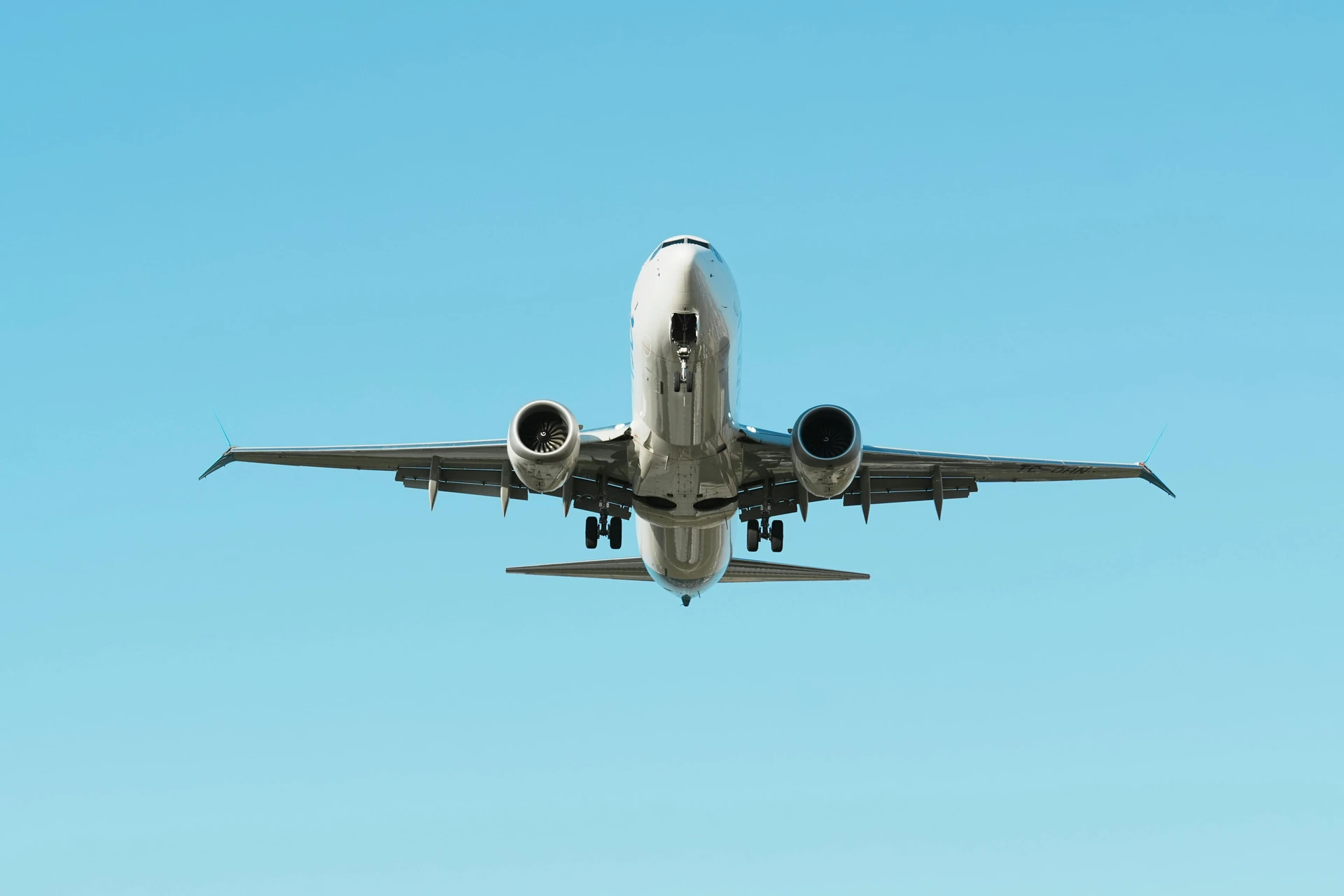
How budget carriers are capturing the corporate segment
In March 2025, Ryanair announced the launch of its Business Plus fare on 80 routes between European business centres. The Dublin-Frankfurt ticket price came to €89 versus €210 at Lufthansa for a comparable service bundle. By the end of 2025, the share of corporate clients in the Irish low-cost carrier's revenue structure grew from 12% to 23%, according to the company's Q4 2025 quarterly report.
Premium low-cost airline fares for business have ceased to be an oxymoron. Wizz Air, easyJet, Vueling and even Asian carriers AirAsia and IndiGo have been testing products for corporate clients since 2024. The key difference from traditional business classes: no physically enlarged seats or onboard catering, but all operational advantages - flexible cancellation, priority at every stage and included baggage.
What's included in a low-cost carrier's corporate fare in 2026
A typical business fare from a budget carrier includes:
- One checked bag up to 23 kg and hand luggage up to 10 kg
- Choice of any seat in the cabin, including rows with extra legroom
- Priority check-in and boarding through a separate entrance
- Free cancellation or flight change up to 24 hours before departure
- Fast-track security (where available)
- Double loyalty programme points
The cabin remains single-class. Seat pitch at Ryanair is 76 cm, at Wizz Air 74 cm. For comparison: in economy at traditional carriers it's 78-81 cm, in business class on short-haul flights 89-97 cm. The 3-5 cm difference is critical on flights longer than four hours, but on routes like Moscow-Istanbul (3 hours) or London-Berlin (1 hour 45 minutes) most passengers don't notice it.
Catering is sold separately. A hot sandwich and coffee cost €6-8, which is still cheaper than the included meal at a legacy carrier, built into the ticket price.
The mathematics of savings: real numbers for the travel manager
An IT company from Warsaw with offices in Berlin and London conducted an experiment in September-December 2025. Of 114 business trips on short routes (up to 1500 km), 68 were booked on Wizz Air and Ryanair premium fares instead of the usual LOT Polish Airlines and British Airways.
The average Wizz Air Flex Plus (corporate fare) ticket cost €97. A comparable LOT flight in economy with included baggage and flexible cancellation was €168. Savings per business trip: €71. On 68 trips, the company saved €4,828 per quarter, or about 29% of the air travel budget for these routes.
An important detail: travel time increased by an average of 35 minutes due to less convenient slots for low-cost carriers (departures at 06:20 or 21:40 instead of daytime). The company compensated for this with a flexible work start policy after early flights and taxi payment instead of public transport for late arrivals. Additional taxi expenses: €12 per trip, or €816 per quarter. Net savings: €4,012.
Hidden limitations that ticket sellers don't mention
Low-cost premium fares don't work on all routes. Ryanair Business Plus is available on only 80 of the carrier's 2,400 network routes. Wizz Air Flex Plus - on 120 of 800. The choice is limited to routes between major business centres: London, Frankfurt, Madrid, Warsaw, Bucharest, Milan.
The second problem is scheduling. Low-cost carriers get cheap slots during off-peak hours. A 06:00 departure means waking at 03:30 and lost productivity in the first half of the day. A Harvard Medical School study (2024) showed that departures before 07:00 reduce cognitive performance by 14% during the first four hours after landing.
The third limitation is frequency. Lufthansa flies Frankfurt-London 9 times a day, Ryanair 2 times. If a meeting is rescheduled, the choice of alternative flights with a traditional carrier is wider.
Fourth: low-cost carriers often use remote terminals or even secondary city airports. London Stansted is 60 km from the centre (1 hour 20 minutes by train), Heathrow is 25 km (35 minutes). For a one-day business trip, this difference is critical.
When a low-cost premium fare beats business class
Three scenarios where the economics work in favour of the budget carrier:
Scenario 1: Short regular routes between offices
A company with offices in Milan and Bucharest sends sales managers 3-4 times a month. Flight duration: 2 hours 10 minutes. Wizz Air operates the route daily at 14:30, return at 18:50. Flex Plus fare: €76 one way. TAROM (Romania's national carrier) on the same route: €134 in flexible economy. Savings: €116 per trip, or €4,640 per year with 40 business trips.
Scenario 2: Mass transport to conferences and training
A pharmaceutical company sends 35 employees to a three-day conference in Barcelona from Warsaw. Ryanair Business Plus: €102 return. LOT Polish Airlines: €189. Group savings: €3,045. Downside: everyone flies on one flight, and if it's cancelled (Ryanair's cancellation rate in 2025 was 1.8% versus 0.9% at LOT, according to Eurocontrol data), the entire delegation misses the first day.
Scenario 3: Hybrid strategy with priorities
The company divides business trips into categories. C-level (CEO, CFO) - only traditional carriers, business class on flights longer than 3 hours. B-level (department heads) - economy class with traditional carriers or low-cost premium fares on routes up to 2 hours. A-level (specialists, middle managers) - low-cost carriers with extra payment for baggage and seat selection as needed.
This policy reduces the overall budget by 18-22% without compromising top management comfort, according to estimates by consulting firm BCD Travel in its 2025 report.
How to integrate low-cost carriers into your corporate booking system
Most TMCs (travel management companies) ignored budget carriers until 2024. The reason: lack of connection through GDS (Amadeus, Sabre, Travelport). Low-cost carriers sold tickets only through their own websites and APIs, which excluded them from corporate tools.
In 2025, the situation changed. Ryanair signed an agreement with Amadeus in June, Wizz Air with Travelport in August. EasyJet provided corporate clients with a direct API with automatic booking data exchange.
To implement in your corporate travel system, you need to:
Check whether your TMC or self-booking tool supports connection to the required low-cost carrier. TravelPerk and Navan added Ryanair and Wizz Air in 2025, SAP Concur only Ryanair.
Set up a booking policy with price priority under equal conditions. If Ryanair Business Plus is 25% cheaper than Lufthansa Economy Flex and travel time differs by less than an hour, the system will offer the low-cost carrier first.
Train employees on the differences. The main complaint in the first months: expecting onboard catering and disappointment at its absence. A simple memo on the corporate portal solves the problem.
Monitor cancellation and delay rates. If a low-cost carrier shows more than 3% cancelled flights on your routes per quarter, the savings stop justifying operational risks.
Risks that the travel manager must calculate
Low-cost carriers optimise their fleet more aggressively than traditional carriers. At Ryanair, the average aircraft operates 8.5 flights per day versus 5.2 at Lufthansa. This means less time margin for maintenance and a higher probability of cascading delays.
In January 2026, Wizz Air cancelled a morning Budapest-London flight due to technical malfunction. The next available flight was in 22 hours. British Airways had 4 more flights on the same route that day. The low-cost passenger missed negotiations, the company lost a €340,000 contract.
Travel insurance partially compensates for risks. A policy covering flight cancellation costs €8-12 per trip and reimburses expenses for alternative transport and accommodation. But lost working time and missed meetings are not compensated.
The second risk is lack of partnerships. If a Lufthansa flight is cancelled, the airline will rebook you on Swiss, Austrian or United. If a Ryanair flight is cancelled, the carrier will offer a refund or another of its own flights, but not a rebooking on a competitor. Buying a ticket from another airline at the last moment will cost €400-600.
Hybrid model: how to combine carriers without chaos
Large corporations in 2026 are moving to a portfolio approach. Instead of an exclusive contract with one carrier, they conclude framework agreements with 3-4 airlines from different segments.
Example structure:
- Long-haul flights (more than 4 hours): traditional carriers, contract with a fixed discount of 12-18% from the public fare.
- Short European routes (up to 2 hours): low-cost premium fares as the main option, traditional carriers when convenient schedules are unavailable.
- Regional domestic flights: local low-cost carriers or regional airlines depending on geography.
This model requires more complex analytics. The travel manager must compare monthly:
- Weighted average ticket cost per route
- Percentage of delays and cancellations by carrier
- Employee satisfaction (post-trip surveys)
- Share of out-of-policy bookings
Business intelligence tools in TravelPerk, Navan and SAP Concur allow building such reports automatically, but require setting up metrics and KPIs.
What will change in 2026-2027: forecasts from industry analysts
Skift Research analysts in their December 2025 report forecast that by the end of 2027, the share of low-cost carriers in Europe's corporate segment will grow from 8% to 19%. Growth drivers:
- Expansion of the premium fare network: Ryanair plans to bring the number of Business Plus routes to 200 by mid-2026.
- GDS connection: remaining major low-cost carriers (Vueling, Eurowings) will complete integration in the first half of 2026.
- Budget pressure: in conditions of slowing economic growth, companies are looking for savings reserves, and air tickets are one of the largest travel expense items.
However, analysts warn of a "race to the bottom" risk. If corporations massively switch to low-cost carriers, traditional carriers may respond with aggressive price dumping on key business routes, making budget airline premium fares less attractive.
Checklist for the travel manager: how to start working with low-cost carriers tomorrow
Step 1: Route audit
Export data on all air bookings for the past 6 months. Filter flights shorter than 3 hours and cheaper than €200. These are your candidates for transfer to low-cost carriers.
Step 2: Coverage check
Open the Ryanair, Wizz Air, easyJet websites. Enter your top 10 routes from the audit. Check for premium fare availability and schedule convenience. If the morning departure is at 06:00 and the meeting is at 09:00 in the city centre, the route is not suitable.
Step 3: Pilot project
Choose one route with a frequency of at least 5 trips per month. Transfer 50% of bookings to a low-cost carrier, keep 50% with a traditional carrier. Compare costs, travel time, number of employee complaints after 3 months.
Step 4: Policy update
Add a section on low-cost carriers to your travel policy. Specify on which routes they are permitted, which fares can be booked, how to act if a flight is cancelled.
Step 5: Negotiations with TMC
Ask your TMC or self-booking tool provider when they will add the required low-cost carriers to the system. If the answer is "not planning to", consider changing providers. TravelPerk, Navan and Egencia already support major budget carriers.
Why GetOffers simplifies working with different types of carriers
The GetOffers platform aggregates offers from traditional and budget airlines in one interface. The travel manager sees all available options on a route - from Lufthansa to Ryanair - with transparent comparison of price, travel time and fare conditions.
Built-in analytics show savings per route and warn of risks: if a low-cost carrier has an above-average delay rate on the selected flight, the system displays a warning. Automatic policy control prevents an employee from booking a basic fare without baggage if corporate rules require included baggage.
Integration with expense accounting systems closes trip data in ERP without manual entry, regardless of whether the employee flew with a low-cost or traditional carrier.
FAQ
How does a low-cost premium fare differ from regular economy class at a traditional airline?
A low-cost premium fare includes baggage, priority boarding, flexible cancellation and seat selection, but the cabin remains single-class without enlarged seats. Economy class at a traditional carrier often requires extra payment for baggage and seat selection, but offers onboard catering and more convenient departure slots.
How much can you realistically cut the air ticket budget by switching to low-cost carriers?
On short European routes (up to 2 hours), savings amount to 40-60% compared to flexible fares from traditional carriers. Real case: an IT company from Warsaw saved 29% of its budget on 68 business trips in Q4 2025, using Wizz Air and Ryanair instead of LOT and British Airways.
What risks need to be considered when transferring corporate transport to low-cost carriers?
Main risks: higher cancellation rate (1.8% at Ryanair versus 0.9% at traditional carriers in 2025), inconvenient departure slots (early morning or late evening), lack of partnerships for rebooking on another carrier if a flight is cancelled, use of remote terminals or secondary airports.
How to integrate low-cost carriers into a corporate booking system?
Since 2025, Ryanair has connected to Amadeus, Wizz Air to Travelport. Modern TMCs (TravelPerk, Navan, SAP Concur) already support these carriers. You need to check your system's compatibility, set up a booking policy with price priority and train employees on low-cost carrier specifics.
On which routes are low-cost premium fares most profitable?
Optimal routes: short flights between business centres (up to 2 hours), regular transport between company offices, mass trips to conferences. Examples: Milan-Bucharest, Warsaw-London, Frankfurt-Madrid. On routes longer than 3 hours, the difference in cabin comfort becomes more noticeable, and savings may not justify reduced productivity.
What to do if a low-cost carrier cancelled a flight before an important meeting?
Low-cost carriers don't rebook on competitor flights, only offer refunds or their next flight. Recommendations: purchase travel insurance covering cancellation (€8-12 per trip), have a backup option with a traditional carrier in your booking policy for critical meetings, use low-cost carriers only on routes with several flights per day.
Ready to automate business travel?
GetOffers — AI platform for corporate travel management. Save 15–30% on business travel.
Related posts
Business Class on Short-Haul Flights: Is It Worth It?
The price gap between economy and business class on short-haul flights reaches 300%. We examine the real value for corporate travel and decision criteria.
Corporate Airline Fares for Domestic Flights 2026
Negotiating discounts on domestic flights is realistic even with 15–20 tickets per month. We break down negotiation mechanics, entry thresholds, and real savings.
Private Jet Booking: 300% Growth and 2026 Models
Corporate demand for private jets has tripled. We analyse new booking models, real savings, and tools for travel managers in the corporate segment.
Basic Corporate Airfare Rates: 2026 Financial Model
Basic corporate airfare rates cut costs by 18–35%, but hidden expenses can exceed savings. We break down the math and criteria for your travel policy.

Amadeus vs Sabre for Corporate Travel: 2026 GDS Guide
Compare Amadeus and Sabre for corporate clients: real data on costs, features, and integrations. Discover which GDS saves up to 18% of travel budgets.
Dynamic Airline Pricing: Save Up to 28% on Corporate Fares
Corporations lose up to 28% of their budget by not understanding dynamic pricing mechanics. We break down airline algorithms and tools to reduce flight costs.