
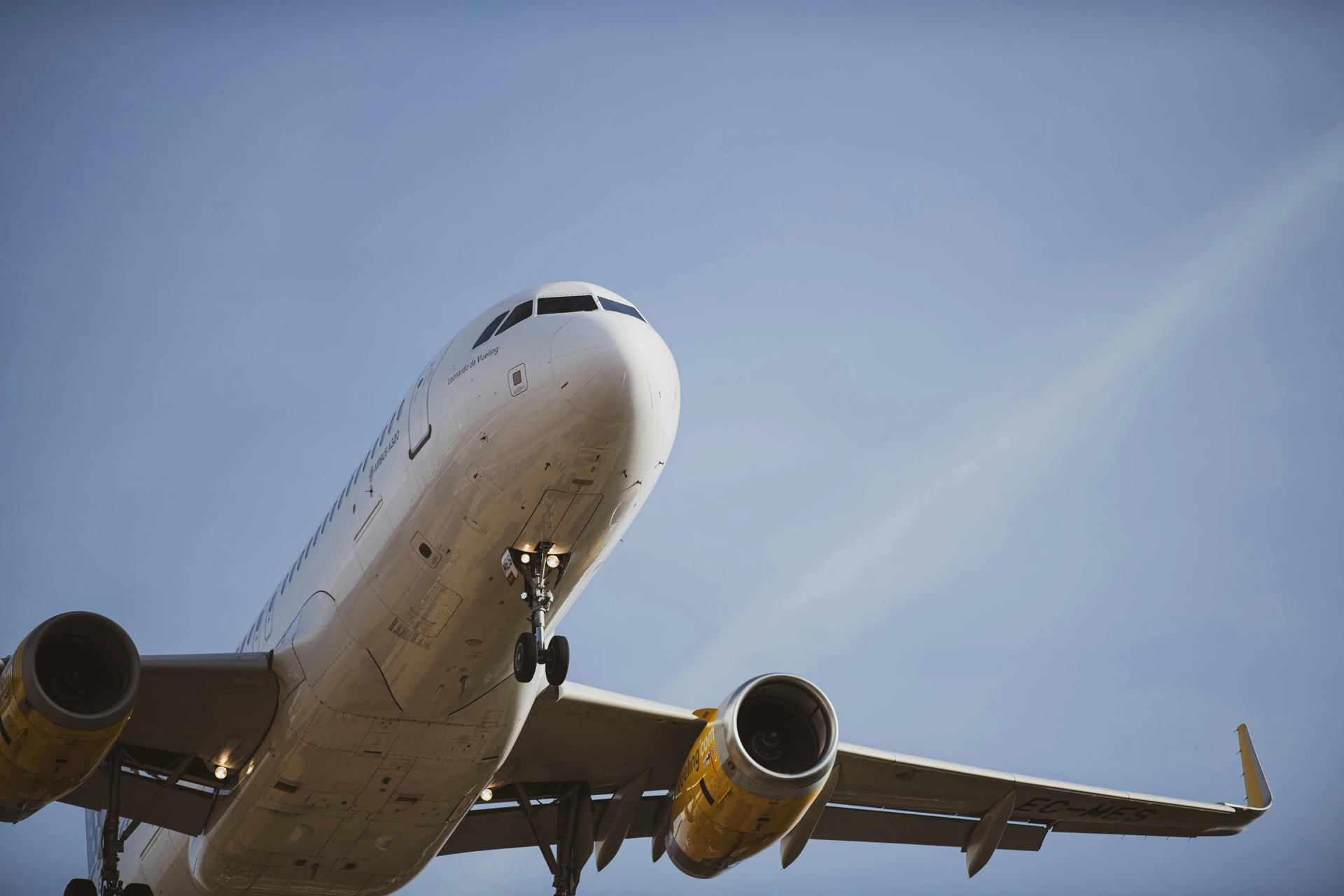
Why Traditional Cost-Saving Methods No Longer Work
Airlines in 2025 deployed third-generation dynamic pricing algorithms that analyze over 200 booking parameters in real time. According to Airlines Reporting Corporation data, price spreads on identical routes between search and purchase moments reach 340% within 72 hours. The old "book 21 days ahead" approach now delivers savings in only 12% of cases versus 67% in 2019.
Companies that continue relying on manual searches for cheap fares lose an average of 23% of their air travel budget. The reason is simple: humans physically cannot track price changes on hundreds of routes that update every 4-6 hours.
Strategy 1: Transition to Predictive Booking with Machine Learning
Machine learning-based systems analyze historical price data on specific routes and predict the optimal purchase moment with accuracy down to an 8-hour window. According to a 2024 Festive Road study, companies with predictive tools cut ticket costs by 18-24% without changing travel policies.
Practical example: An IT company with 180 employees and 55 business trips per month implemented a predictive system in March 2025. Over nine months, average ticket prices dropped from 8,200 to 6,400 rubles for Moscow-St. Petersburg, and from 14,300 to 11,100 rubles for Moscow-Yekaterinburg. Annual savings reached 1.7 million rubles with platform investment of 340 thousand rubles.
Key point: the system must integrate with your travel calendar. The algorithm tracks prices on needed dates automatically and sends notifications when prices enter the optimal purchase window. Manual monitoring consumes up to 12 hours of travel manager work time weekly.
Strategy 2: Volume Consolidation with 2-3 Carriers Instead of Fragmentation
Most companies book tickets with whichever carrier is cheaper at a specific moment. This eliminates access to corporate discounts that airlines provide for guaranteed volumes.
According to ACTE (Association of Corporate Travel Executives) data, companies with consolidated contracts receive 8-15% discounts from base fares plus additional benefits: free seat selection, priority check-in, increased baggage allowance. At volumes of 500+ segments annually, negotiating position becomes sufficiently strong.
How to calculate optimal carrier number: analyze route structure over the past 12 months. If 70% of business trips fall on 5-7 destinations, select two carriers with maximum coverage of these routes. Use aggregators for the remaining 30%.
When negotiating with airlines, request not a fixed percentage discount but a hybrid model: base discount of 5-7% plus an additional 3-4% when exceeding agreed volume by 20%. This motivates employees to choose partner carriers and creates a snowball effect.
Strategy 3: Implement 48-Hour Window Rule for Non-Critical Trips
Analysis of 340,000 corporate bookings conducted by CWT in 2024 showed: tickets purchased 48-72 hours before departure on off-peak days (Tuesday-Thursday) prove cheaper in 41% of cases than booking 2-3 weeks ahead. Reason: airlines dump unsold seats at reduced prices.
Implement a travel policy rule: for trips with flexible dates (conference attendance, scheduled meetings, training), booking occurs 48-72 hours ahead. For critical trips (negotiations with specific dates, presentations), maintain the standard 14-21 day window.
Important clarification: the strategy works only on routes with high flight frequency (3-4+ daily). On routes with one flight per day, the risk of being left without a ticket or overpaying for last seats is too high.
For automation, use a system with deferred booking function: an employee creates a request 3-4 weeks ahead, but the system purchases the ticket automatically in the optimal 48-72 hour window if the price dropped by 15% or more.
Strategy 4: Audit Real Cost of Business Class Versus Premium Economy
Traditional logic: top management flies business class, everyone else economy. But the emergence of premium economy with increased legroom, priority boarding, and improved meals changed the calculation.
Compare real numbers on your top routes. Moscow-Vladivostok: economy 18,000 rubles, premium economy 26,000 rubles (+44%), business class 78,000 rubles (+333% over base economy). The difference between premium and business is 52,000 rubles per ticket.
For flights up to 4 hours, transitioning top management from business to premium economy has virtually no impact on comfort but saves 40-60% of segment cost. On routes over 6 hours, it makes sense to retain business class but introduce a rule: only for flights with work activity on arrival day.
Specific calculation: a company with 15 top managers making an average of 8 flights per year lasting 2-4 hours. Transition to premium economy on these routes: 15 × 8 × 35,000 rubles savings = 4.2 million rubles annually.
Strategy 5: Using Alternative Airports with Transfer
Moscow has three major airports, St. Petersburg one, but within 200 km of most million-plus cities there are regional airports with substantially lower fares. Ticket price difference can reach 4-7 thousand rubles.
Example: Moscow-Kazan flight. Direct flight to Kazan costs 9,800 rubles. Flight to Yoshkar-Ola (180 km from Kazan) costs 5,400 rubles. Taxi or car-sharing transfer will cost 2,200-2,800 rubles. Savings of 1,600-2,200 rubles per segment.
Method limitations: works only for trips without tight timing, where an additional 1-2 hours en route is acceptable. Requires preliminary analysis of transfer availability and reliability. Not suitable for late evening arrivals in cities with poor transport accessibility.
Create an internal knowledge base with verified alternative routes: which airports to use, how to organize transfer, in which cases savings justify additional time. This transforms a one-off hack into a systematic tool.
Strategy 6: Loyalty Programs as a Tool for Reducing Future Costs
Many companies ignore mileage accumulation on corporate tickets, allowing employees to credit them to personal cards. At volumes of 800-1000 segments per year, the company loses the opportunity to obtain 15-25 free tickets or upgrades.
Implement centralized mileage accumulation on a corporate account. Most airlines offer corporate loyalty programs with 50-75% of miles credited to the company and 25-50% to the employee. This balances personnel motivation and economic benefit for the business.
ROI calculation: a company with 60 business trips per month, average distance 2,100 km. Over a year, approximately 1.5 million miles accumulate. This equals 12-18 economy class tickets on medium-haul routes or 4-6 business upgrades. Monetary equivalent: 180-280 thousand rubles savings.
Key point: appoint someone responsible for monitoring mileage balance and usage. Miles have an expiration date (usually 36 months), and without control, companies lose up to 40% of accumulated bonuses due to expiration.
Strategy 7: Weekly Analysis of Deviations from Planned Cost
Most companies analyze airfare expenses monthly or quarterly. This is too infrequent for operational correction. Implement weekly 15-minute analysis: comparing actual cost of purchased tickets with planned (average per route over the past 90 days).
When deviation exceeds 20% on a specific route for two consecutive weeks, it's a signal for action: revising booking timing, searching for alternative carriers, analyzing reasons for price growth (seasonality, events in destination city).
Implementation tool: create a simple table with columns: route, purchase date, cost, 90-day average price, percentage deviation. Automate data collection through booking system export. Analysis takes 10-15 minutes but reveals systemic problems.
Practice example: a company discovered that Moscow-Novosibirsk tickets were consistently purchased 28% above average. Reason: employees booked Monday morning flights (peak demand). Changing the rule to Sunday evening flights reduced cost by 4,200 rubles per ticket with 8 trips monthly. Savings of 403 thousand rubles per year.
Integrating Strategies into a Unified Management System
Each strategy works independently, but maximum effect is achieved through comprehensive implementation. Start with a current expense audit: export 12 months of data, segment by routes, service classes, booking timing.
Identify three routes with highest expenses (typically 40-50% of budget) and apply strategies 1, 2, and 7 to them. After 60 days, evaluate results. With 15%+ savings, scale the approach to remaining destinations.
For companies with fewer than 30 business trips monthly, priority: strategies 3, 4, and 5. They require no complex carrier negotiations and deliver quick results. For companies with 100+ trips monthly, automation through strategies 1, 6, and 7 is critical.
Common Mistakes in Cost Optimization
Most frequent mistake: focusing only on ticket price without accounting for associated costs. A 6,000-ruble ticket with 06:00 departure requires a 1,800-ruble taxi to the airport and a 3,500-ruble hotel night. An 8,500-ruble ticket with 09:00 departure allows the employee to leave home in the morning. Real cost of the first option is 11,300 rubles versus 8,500 rubles for the second.
Second mistake: ignoring employee time cost. A connecting route is 3,000 rubles cheaper but adds 4 hours in transit. For a specialist with an hourly rate of 2,500 rubles, that's 10,000 rubles of lost work time. The savings turns into a 7,000-ruble loss.
Third mistake: lack of flexibility in travel policy. Rigid rules like "economy only" or "booking strictly 21 days ahead" eliminate the ability to use situational advantages. Policy should contain exceptions with a clear approval process.
Metrics for Tracking Effectiveness
Beyond total expense amount, track four key metrics:
Average cost per kilometer flown (total cost / total kilometers). Allows comparing efficiency on different routes independent of distance. Target value for 2026: 3.2-4.1 rubles per kilometer on domestic flights.
Percentage of bookings in optimal price window (number of tickets purchased at below-average route price). Target value: minimum 60%. If the indicator falls below 40%, the booking system requires review.
Share of canceled or changed tickets. Each change costs 1,500-3,500 rubles in penalties plus fare difference. If the indicator exceeds 15%, the problem lies in trip planning, not ticket purchasing.
Average booking lead time before departure by trip categories. Track separately for critical and flexible business trips. This reveals patterns and helps configure automatic reminders.
Maintain a dashboard with these metrics and update weekly. Data visualization helps quickly identify anomalies and make decisions based on facts, not intuition.
Preparing for Market Changes in 2026
The aviation industry continues recovering from previous years' turbulence. IATA experts forecast 8-12% growth in jet fuel prices in the first half of 2026, which will inevitably affect ticket costs.
Companies that have already implemented monitoring systems and flexible booking strategies will adapt faster. Lock in prices on regular routes through corporate contracts with revision terms no more frequent than quarterly. This protects against sharp tariff spikes.
Consider partial transition to rail transport for routes up to 700 km, where train travel time is comparable to air (accounting for airport transfer and check-in). A Moscow-St. Petersburg high-speed train ticket is often 2-3 thousand rubles cheaper than air travel and doesn't require arrival two hours early.
The main optimization principle in 2026: data matters more than intuition, automation matters more than manual labor, flexibility matters more than rigid rules. Companies that adopt this approach will cut corporate airfare costs by 20-30% without compromising travel comfort.
FAQ
What percentage of savings is realistically achievable when optimizing corporate airfare costs?
With a comprehensive approach, companies achieve 18-30% savings on annual air travel budgets. Key factors: implementing predictive booking (18-24% savings), consolidation with 2-3 carriers (8-15% discounts), revising service class policy (up to 40-60% savings on individual segments). Results depend on current process maturity and business trip volume.
How many days before departure is it most profitable to buy corporate tickets in 2026?
A universal rule no longer exists. For routes with high flight frequency (3-4 daily), the optimal window often occurs 48-72 hours ahead, when airlines reduce prices on unsold seats. For destinations with 1-2 flights daily, booking 14-21 days ahead is safer. Machine learning systems analyze price dynamics on specific routes and determine optimal purchase moments with 8-hour accuracy.
Is it worth transitioning top management from business class to premium economy?
For flights up to 4 hours, transitioning to premium economy saves 40-60% of segment cost with minimal comfort loss. On routes over 6 hours, it makes sense to retain business class, but only for flights with work activity on arrival day. A company with 15 top managers and 8 short flights per person annually saves approximately 4.2 million rubles with this approach.
How to organize mileage accumulation on corporate tickets?
Implement centralized accumulation through airline corporate loyalty programs. Optimal model: 50-75% of miles credited to corporate account, 25-50% goes to employee for personal motivation. At 60 business trips monthly, the company accumulates 1.5 million miles annually, equivalent to 180-280 thousand rubles savings. Appoint someone responsible for balance monitoring, as miles expire after 36 months.
What metrics should be tracked to control airfare cost effectiveness?
Four key metrics: average cost per kilometer flown (target value 3.2-4.1 rubles for domestic flights), percentage of bookings in optimal price window (minimum 60%), share of canceled or changed tickets (no more than 15%), average booking lead time before departure by trip categories. Update indicators weekly for rapid deviation detection and quick strategy correction.
Is it profitable to use alternative airports with transfer?
The method works for trips without tight timing on routes where the alternative airport is within 150-200 km of the destination. Savings amount to 1,600-2,200 rubles per segment after deducting transfer cost. Not suitable for late evening arrivals and destinations with poor transport accessibility. Create a knowledge base with verified alternative routes for systematic use of this tool.
Ready to automate business travel?
GetOffers — AI platform for corporate travel management. Save 15–30% on business travel.
Related posts
Business Class on Short-Haul Flights: Is It Worth It?
The price gap between economy and business class on short-haul flights reaches 300%. We examine the real value for corporate travel and decision criteria.
Corporate Airline Fares for Domestic Flights 2026
Negotiating discounts on domestic flights is realistic even with 15–20 tickets per month. We break down negotiation mechanics, entry thresholds, and real savings.
Private Jet Booking: 300% Growth and 2026 Models
Corporate demand for private jets has tripled. We analyse new booking models, real savings, and tools for travel managers in the corporate segment.

Premium Low-Cost Airline Fares: A New Era in 2026
Low-cost carriers are launching business fares with priority boarding and baggage for 40–60% less than legacy airlines. We analyse the economics for corporations.
Basic Corporate Airfare Rates: 2026 Financial Model
Basic corporate airfare rates cut costs by 18–35%, but hidden expenses can exceed savings. We break down the math and criteria for your travel policy.

Amadeus vs Sabre for Corporate Travel: 2026 GDS Guide
Compare Amadeus and Sabre for corporate clients: real data on costs, features, and integrations. Discover which GDS saves up to 18% of travel budgets.