
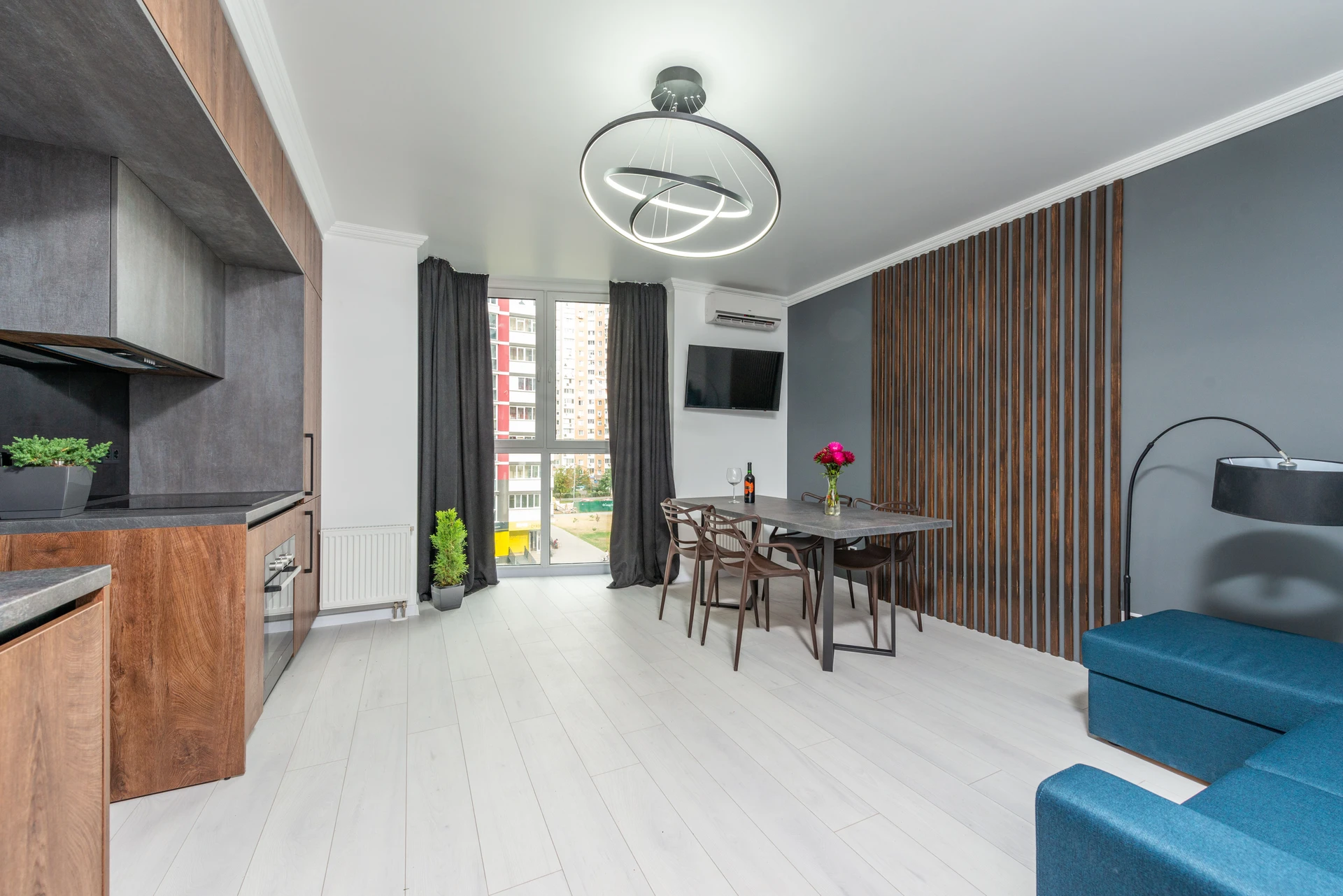
What hotel apart-collections are and why they appeared in the corporate segment
Hotel chains launched special apartment collections within their loyalty programs after the pandemic changed business traveller requirements. Marriott Bonvoy Homes & Villas, Hyatt Homes, Accor Home Collection - these are not just Airbnb flats, but verified accommodation with corporate rates, unified billing, and points accrual.
According to the Deloitte Travel & Hospitality Outlook 2025 study, 41% of companies with travel budgets over $5 million expanded their approved accommodation list with apartments featuring kitchens. The reason is simple: employees on extended trips (7+ days) spend 18-25% more on meals when staying in standard rooms without cooking facilities.
Hotel apart-collections for business bridge the gap between strict expense control and staff comfort. The company gets billing transparency, the employee gets a washing machine and refrigerator, the CFO gets reduced per diems.
How major chains' apart-collections work in 2026
Marriott Bonvoy Homes & Villas unites more than 24,000 properties in 60 countries. Each apartment passes inspection on 150 criteria: from Wi-Fi speed (minimum 50 Mbps) to the presence of a work desk with outlets. Corporate clients book through the same interface as regular Marriott hotels, with automatic application of the corporate rate.
Hyatt Homes works differently: the chain doesn't own apartments but partners with management companies like Sonder and Mint House. All properties are equipped with smart locks with mobile keys and early check-in systems without staff involvement. For business travellers, this means flexibility: arrived at 6 a.m. - checked in immediately, no extra charge for early check-in.
Accor Home Collection focuses on Europe: 70% of the portfolio is in France, Germany, Spain. Minimum booking period is 3 nights, which filters out tourists and makes the collection convenient for project teams. Example: an engineering company from Munich accommodates a crew of 6 people in three-bedroom apartments in Barcelona for 14 days. Cost - €180 per night (€30 per person), whereas six single rooms in a 3* hotel would cost €420-480.
Economics of apart-collections: when the format beats standard hotels
Break-even point - from 5 nights for one employee or from 3 nights for two or more people in one location. The calculation is based on three factors: cost per night, meal savings, transport costs.
Take the case of an IT company from Saint Petersburg that sends developers to Kazan for 10-day sprints. Standard scenario: 4* hotel room for 6,500 roubles/night + 2,000 roubles per diem for meals = 85,000 roubles per person per trip. Apart-scenario: two-bedroom apartment for 9,000 roubles/night for two (4,500 per person) + groceries 800 roubles/day = 53,000 roubles per person. Savings of 37.6% provided employees actually cook at least breakfasts and dinners.
But there are hidden costs. Apartments rarely include daily housekeeping - usually once every 3-7 days. If corporate policy requires daily cleaning, you'll pay extra €15-25 per visit. Second point: no reception desk. When an employee has a problem at 11 p.m., they call the chain's call centre, not go down to the front desk. Issue resolution time increases.
Integrating apart-collections into corporate travel programs
Most TMCs (travel management companies) added apart-collections to search engines in 2024-2025. SAP Concur, TravelPerk, Navan show apartments in the general output with hotels, but with separate filters: "kitchen", "washing machine", "workspace".
The problem is in booking policy. If your travel policy allows hotels up to 4* and contains no mention of apartments, formally the employee cannot book them without approval. The travel manager needs to specify criteria: "Apartments from Marriott, Hyatt, Accor collections are permitted for trips of 5+ nights, cost not exceeding the average price of a 3* hotel in the same city + 15%".
Second step - set up reporting. Apartments often issue one invoice for the entire period, not broken down by nights. Accounting must know how to allocate such expenses, especially if the trip spans from one month to another.
Third point: insurance. Standard corporate traveller policies cover hotel accommodation but sometimes contain a clause about "licensed accommodation facilities". Apartments from hotel collections usually fall under the definition, but it's better to request written confirmation from the insurer.
Technical requirements for apartments for business travellers
Internet speed is the first parameter. Minimum 50 Mbps download, 10 Mbps upload. For video conferences with multiple participants this is sufficient, but if the employee works with heavy files (design, video editing, CAD), you need 100+ Mbps. Marriott and Hyatt indicate Wi-Fi speed in each property description, Accor does this selectively so far.
Workspace - not a sofa cushion on your lap. Desk height 72-76 cm, chair with back support, outlet within a metre, lighting minimum 500 lux. Sounds trivial, but 30% of short-term rental apartments lack a proper work desk. Hotel collections solve this problem with standards.
Security: electronic locks with entry logging, cameras in common areas (corridors, lobby), 24-hour support service. If apartments are in a residential building without a concierge, this is a risk for the lone traveller - an employee travelling alone. Corporate duty of care policy requires that the company knows where staff are and whether they could safely reach their destination.
Comparing apart-collections and serviced apartments
Serviced apartments (Ascott, Oakwood, Adagio) are a separate category. They always include daily housekeeping, reception, sometimes breakfast and a gym. Minimum booking period is usually 7 nights, optimal - from 30. Cost is 20-40% higher than apart-collections, but 30-50% lower than extended hotel stays.
Hotel apart-collections occupy an intermediate niche: cheaper than serviced apartments, more flexible on terms (you can book for 2 nights, though unprofitable), but without daily service. Choice depends on the trip profile.
For relocating a key specialist for 3 months - serviced apartments. For a project team for 2 weeks - apart-collection. For a standard 3-day business trip - regular hotel. Companies that try to fit everyone under one format either overpay or underdeliver comfort.
Checklist for travel managers: implementing apart-collections in 30 days
Week 1: audit current expenses
Export travel data for the past 12 months. Filter trips of 5+ nights duration. Calculate average accommodation and per diem costs separately. This is your baseline for comparison.
Week 2: negotiations with hotel chains
Contact corporate departments of Marriott, Hyatt, Accor. Request access to apart-collections at your existing corporate rate. If you don't have a direct agreement with the chain, act through your TMC - they have consortium rates.
Week 3: update travel policy
Add a section on apartments: usage criteria, cost limits, property requirements. Specify who approves bookings (automatically for 7+ day trips or through manager for shorter ones).
Week 4: pilot and feedback
Select 5-10 upcoming trips that fit the criteria. Book apartments instead of hotels. Collect employee feedback: 10-question survey (Wi-Fi quality, location convenience, cleanliness, availability of necessities, willingness to use again). Calculate actual savings including all costs.
Risks and pitfalls of apart-collections
Mismatch with description occurs more often than in hotels. A hotel with a 4.2 rating on Booking will be roughly the same any day. Apartments are individual properties, and if the owner recently changed furniture or, conversely, hasn't updated photos for 3 years, the employee gets a surprise.
Solution: book properties with at least 20 reviews and a 4.5+ rating. For critical trips (client negotiations, investor presentations), use proven hotels, and leave apartments for working trips.
Second problem - location. Apartments are often in residential areas, not business districts. Savings on accommodation can be eaten up by taxi costs. Check distance to the client's office or workplace, not just to the city centre.
Third risk - cancellation. Hotels usually allow free cancellation 24-48 hours in advance. Apartments in collections often require 7-14 days, and when booking for a month may withhold 50% if cancelled later than 30 days. For companies with volatile plans, this is critical.
2026 trends: where the apart-collections market is heading
Hybrid properties: Hilton is testing a format where the lower floors of a building house a hotel, the upper floors - apartments, but with shared infrastructure (restaurant, laundry, meeting rooms). An apartment guest can buy breakfast or order housekeeping à la carte, like in a hotel.
Integration with coworking spaces: Accor has partnered with WeWork and Spaces in 12 European cities. When booking apartments for 5+ days, guests receive a free day pass to the nearest coworking space. For employees who need a change of scenery or a meeting room, this solves the problem of working from the flat.
Sustainability: apartments consume 30-40% less energy per guest than hotels, due to the absence of daily linen changes, 24-hour corridor and lobby lighting. Companies with ESG goals are starting to account for the carbon footprint of business trips, and apartments provide an advantage.
How to measure the effectiveness of switching to apart-collections
Three metrics matter: total cost of ownership (TCO), employee satisfaction (ESAT), compliance with travel policy.
TCO is calculated as: (cost per night × number of nights) + meals + transport to/from workplace + additional services (housekeeping, parking). Compare with the baseline hotel scenario. If savings are less than 10%, apartments may not be worth the organisational effort.
ESAT: survey travellers 3-5 days after return. Key question: "Would you choose this format again for a similar trip?" If fewer than 70% answer "yes", dig deeper - perhaps the problem is in specific properties or locations.
Compliance: track how many employees book apartments when policy permits. If adoption rate is below 20% with a potential of 50%, reasons may be in booking process complexity or insufficient communication of benefits.
Practical steps for companies of different sizes
Small business (up to 50 trips per year): don't sign direct agreements with chains. Use corporate rates through Booking.com for Business or similar. Add to policy: "Apartments are permitted if the cost for the period does not exceed hotel + 10% and there is manager approval".
Medium business (50-500 trips): connect a TMC that aggregates apart-collections. Set up automatic approval for 7+ day trips within the limit. Analyse data quarterly and adjust policy.
Large business (500+ trips): sign direct agreements with 2-3 chains, get a dedicated account manager. Implement pre-approval lists of properties in key cities (Moscow, Saint Petersburg, Kazan, Yekaterinburg, etc.) so employees choose from verified options. Integrate data into expense management system for automatic reconciliation.
Hotel apart-collections for business are not a replacement for standard accommodation, but an additional tool. Companies that have learned to apply it selectively get measurable savings and more satisfied employees on extended trips.
FAQ
How do hotel apart-collections differ from regular flat rentals?
Apart-collections pass hotel chain quality standard inspections, include corporate billing, loyalty points accrual, and 24-hour support. Regular rentals don't provide expense transparency and a unified agreement for the company.
From what trip duration is it profitable to book apartments instead of a hotel?
Economic break-even point - from 5 nights for one employee or from 3 nights for two or more people in one location. For shorter trips, the price difference doesn't compensate for the absence of daily service.
How to integrate apart-collections into an existing corporate travel program?
Update travel policy with apartment usage criteria, connect them through your TMC or directly through corporate departments of Marriott, Hyatt, Accor. Set up automatic approval rules and reporting in your expense management system.
What technical requirements for apartments are important for business travellers?
Wi-Fi speed minimum 50 Mbps, full workspace (desk 72-76 cm, chair with back support, outlets), electronic locks, 24-hour support service. For working with heavy files, you need 100+ Mbps internet.
What hidden costs arise when using apartments on business trips?
Housekeeping is usually once every 3-7 days, daily costs €15-25 per visit. Apartments are often in residential areas - transport to the office may be more expensive. Cancellation terms are stricter: 7-14 days instead of 24-48 hours in hotels.
Ready to automate business travel?
GetOffers — AI platform for corporate travel management. Save 15–30% on business travel.
Related posts
Three-Star Hotels for Business Travel: Budget Balance 2026
Three-star hotels cut expenses by 28–35% without sacrificing quality. We examine selection criteria, regional pricing, and common booking mistakes.
Hotel Group Booking for Conferences: 2026 Checklist
Step-by-step checklist for negotiating with hotels for corporate conferences: from calculating room blocks to cancellation terms. Real numbers and scenarios.
Serviced Apartments for Extended Business Trips
Real cost comparison of serviced apartments vs. hotels for business trips of 14+ days. Expense calculations, tax nuances, and selection criteria for travel managers.

Hotel Corporate Programme: Negotiating 15%+ Discounts in 2026
Step-by-step guide to negotiating with hotels for corporate programmes. How to secure 15%+ discounts, which metrics to prepare, and where to find leverage.

Preferred Supplier Program with Hotels: 2026 Negotiation Guide
How to build a preferred supplier program with hotels and secure up to 25% discounts, guaranteed room availability, and real-time reporting — a step-by-step guide for travel managers.

Group Hotel Booking for Business with Up to 25% Discount
How corporations secure up to 25% discounts on hotels through group booking. We break down negotiation mechanics, volume contracts, and real savings cases in 2026.