
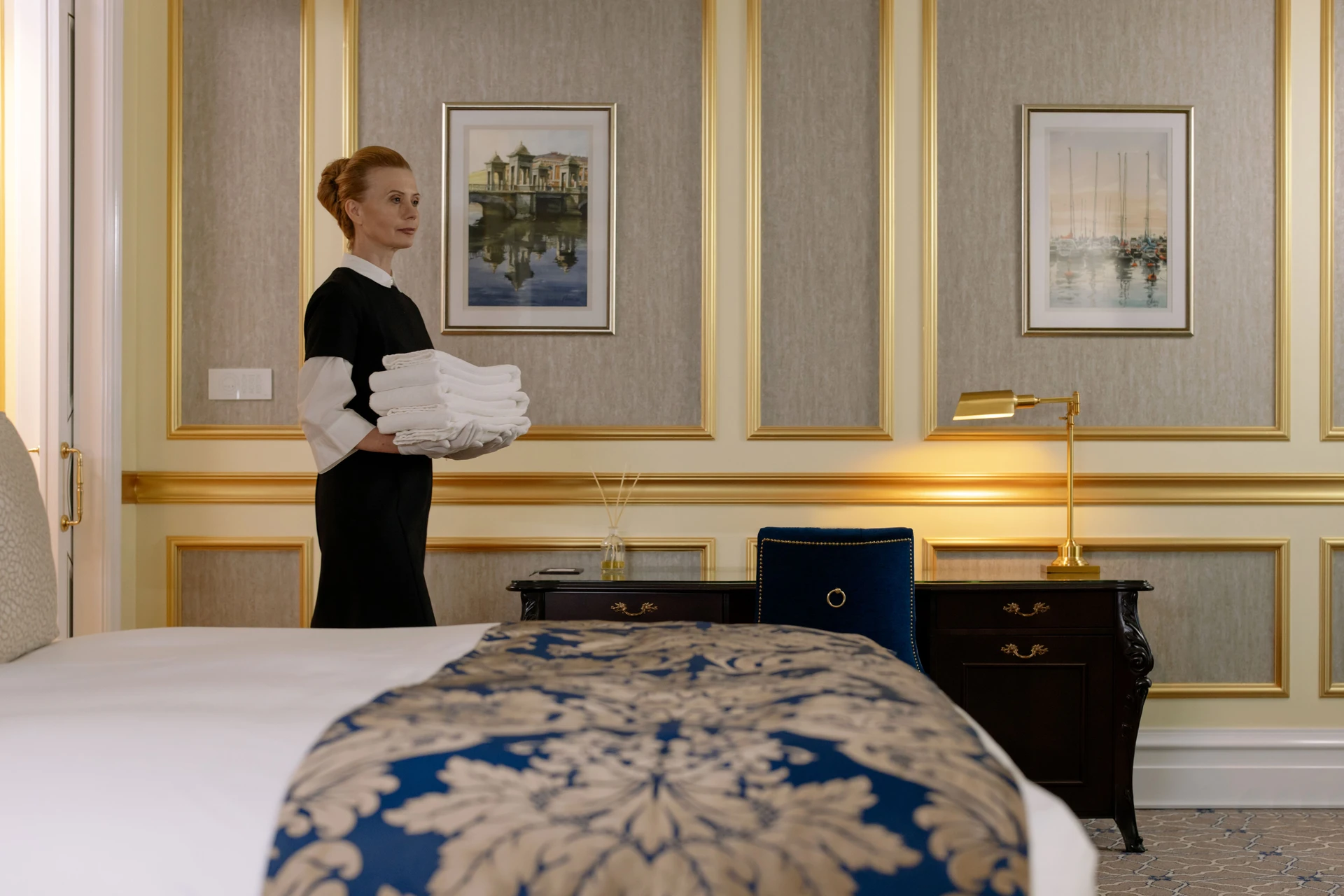
Why three stars became the new standard for corporate travel
Companies are revising travel policies after accommodation costs rose 19% in 2024-2025. Three-star hotels now account for 62% of all corporate bookings in Russia, according to the Business Travel Association's first-quarter 2025 data. The reason is simple: a combination of functionality and price.
The cost difference between three-star and four-star categories averages 2,800-4,200 rubles per night in regional centres. With 120 business trips per year, a company saves 336,000 to 504,000 rubles on accommodation alone. These funds can be redirected to expand training programmes or improve working conditions.
What's included in a three-star hotel standard in 2026
The three-star category under Russian classification by Rostourism means a specific set of services. Room area from 12 m², en-suite bathroom, television, refrigerator, free Wi-Fi at speeds from 10 Mbps. Breakfast is included in 78% of cases, but the format may vary from buffet to continental.
A work area with desk and power outlets is present in 84% of standard rooms and 96% of business rooms. This is critical for employees working on documents in the evening or participating in video conferences. Air conditioning or split systems are available in 91% of hotels in this category in cities with populations over 500,000.
Soundproofing remains a weak point. Only 43% of three-star properties provide noise levels below 35 dB at night. When choosing a hotel, check reviews about sleep quality, especially if the property is located on central streets or near transport hubs.
Regional differences: Moscow, Saint Petersburg, and million-plus cities
The average cost of a night in a three-star Moscow hotel in March 2026 is 4,900-6,700 rubles when booking 14 days in advance. In Saint Petersburg, the range is 4,200-5,800 rubles. Kazan, Yekaterinburg, and Novosibirsk offer accommodation for 3,100-4,500 rubles.
Geography affects service. In Moscow, three-star hotels more often provide 24-hour reception and concierge services. In regional centres, reception may operate until 23:00, creating problems with late flights. Clarify reception hours when booking late-night arrivals.
Example: a manufacturing company from Nizhny Novgorod sends engineers to Krasnodar for equipment installation. Average trip duration is 6 nights, frequency 8 trips per month. Choosing a three-star hotel instead of four-star saves 134,400 rubles monthly while maintaining all necessary conditions for work and rest.
Selection criteria for hotels in corporate programmes
Distance to workplace or meetings should not exceed 30 minutes by public transport or taxi. Every additional 15 minutes of travel reduces employee productivity by 7%, according to a 2024 Higher School of Economics study. Consider not only kilometres but also traffic congestion during peak hours.
Corporate rates or agreements with hotels reduce costs by 12-18%. Chains like Azimut Hotels, Business Hotel, and regional operators offer fixed prices with volumes from 20 nights per quarter. A contract avoids seasonal price spikes and guarantees availability during high-demand periods.
The cancellation system must be flexible. Standard three-star hotel terms provide free cancellation 24-48 hours in advance. Corporate rates often reduce this period to 6-12 hours, which is critical when meetings are rescheduled or flights cancelled.
Reputation check: what to look for in reviews
A rating above 8.0 on Booking.com or Yandex Travel indicates stable quality. Read the latest 15-20 reviews from the current month, not the overall rating. The hotel may have changed management or undergone renovation, which changes service levels.
Pay attention to mentions of cleanliness, staff performance, and breakfast quality. If three or more reviews in the past month complain about the same problem (for example, cold water in the morning or non-functioning Wi-Fi), this is a systemic fault, not a coincidence.
Management responses to negative comments show attitude towards guests. A hotel that ignores complaints or responds formally will likely not resolve your problem promptly. Constructive responses with apologies and descriptions of measures taken indicate customer orientation.
Hidden costs and how to avoid them
Parking at three-star hotels in Moscow and Saint Petersburg is paid separately in 67% of cases. Cost is 300-800 rubles per day. If employees travel in company cars, add this item to calculations or choose hotels with free on-site parking.
Paid Wi-Fi is rare (less than 5% of properties), but speed limitations for basic tariffs exist at 22% of hotels. A speed of 5 Mbps is sufficient for email and messengers but insufficient for high-quality video calls. Clarify the possibility of upgrading to business-tier Wi-Fi without extra charge under a corporate contract.
Mini-bar and additional laundry services increase the bill by 15-20% if you don't prohibit them in your travel policy. Configure rules in the booking system: automatically exclude rooms with paid mini-bars or set limits on additional services.
Booking technology: how to automate the process
Business travel management platforms (GetOffers, TravelLine Corporate, SAP Concur) integrate with hotel inventory and apply corporate rules automatically. Employees see only options that comply with company policy on price, location, and category.
Automatic price comparison saves 8-12 minutes per booking and eliminates human error. The system selects the optimal option based on the ratio of price, distance to the client's office, and hotel rating. The travel manager receives a report with justification for the choice.
Integration with corporate cards and expense accounting systems closes the financial cycle without manual data entry. The hotel invoice automatically enters accounting, linked to the project and employee. This reduces expense report processing time from 40-60 minutes to 5-7 minutes.
Mistakes when choosing three-star hotels
Booking by the "cheapest" principle without considering location leads to increased transport costs. Saving 800 rubles on a room can result in 1,200 rubles on taxis and loss of two hours of working time. Calculate the full cost of the business trip, not just accommodation.
Ignoring seasonality causes price spikes. In Sochi, Kazan, and Saint Petersburg, three-star hotel costs increase by 40-70% during major events, conferences, or tourist season. Plan trips in advance or choose alternative dates.
Lack of backup options creates risks. If a hotel cancels a booking one day before check-in (this happens in 2-3% of cases), the employee loses time searching for a replacement. Keep a list of three verified hotels in each city with frequent business trips.
2026 trends: sustainability and hybrid formats
Three-star hotels are implementing eco-practices to reduce operating costs. Abandoning single-use plastic, energy-saving lighting, and towel reuse systems have become standard at 58% of chain operators. This doesn't affect guest comfort but improves the client company's ESG indicators.
Hybrid "hotel + coworking" formats are appearing in regional centres. Shared workspaces with printers, meeting rooms, and coffee points are available to guests free or for a nominal fee of 200-300 rubles per day. This is convenient for employees who need to hold meetings or work between client visits.
Long-term stays (from 7 nights) at three-star hotels offer discounts of 15-25% and additional services: weekly cleaning, free laundry, kitchen access. This format suits installation crews, auditors, or specialists working on long-term field projects.
How to measure the effectiveness of hotel category selection
Compare actual accommodation expenses for the quarter with planned ones. Deviation greater than 10% requires analysis of reasons: have routes changed, have prices risen in specific cities, or are employees booking hotels outside the approved list.
Collect feedback from business travellers. A short five-question survey (sleep quality, location convenience, Wi-Fi speed, cleanliness, overall rating) after each trip identifies problematic properties. If a hotel receives a rating below 7 from three different employees, exclude it from the programme.
Track indirect indicators: number of complaints about fatigue after business trips, requests to reschedule meetings due to accommodation problems, cases of illness after trips. Poor living conditions reduce immunity and work capacity, which is more expensive than any hotel savings.
Checklist for travel managers when choosing a three-star hotel
Verify star rating currency on the Rostourism website. Some hotels indicate a three-star category in advertising but have not undergone official classification. The registry of classified accommodation facilities is publicly available.
Clarify corporate rate terms: is breakfast included, what is the cancellation policy, is there a guarantee of availability on peak dates. Get written confirmation of all agreements; verbal promises from a sales manager have no legal force.
Conduct a test stay before including the hotel in the corporate programme. Book a room for one night for yourself or a colleague, evaluate all aspects personally. Photos on the website and reality can differ significantly.
Create a matrix of hotels by city indicating price, distance to key locations (client offices, production sites, airport, railway station), and contact details of the responsible person. Update the document quarterly.
Three-star hotels as part of expense management strategy
Accommodation category optimisation works only in combination with other measures. Review business trip frequency: can some trips be replaced with video conferences. Combine several goals into one trip instead of three short visits.
Redirect saved budget to improving office working conditions or employee training. People are more loyal to reasonable savings if they see money going to team development rather than simply "cutting costs."
Three-star hotels meet 90% of business traveller needs at a cost one-third lower than premium options. Proper property selection, booking automation, and regular quality audits make this category the optimal solution for companies with trip volumes from 15 per month.
FAQ
How does a three-star hotel differ from a four-star for business trips?
A three-star hotel provides all necessary conditions for work and rest: work area, Wi-Fi, en-suite bathroom, breakfast. Four-star adds expanded services (concierge, fitness, restaurant) rarely used on business trips. The price difference is 2,800-4,200 rubles per night with comparable comfort levels for business travellers.
How to verify the real quality of a three-star hotel before booking?
Read the latest 15-20 reviews from the current month on Booking.com or Yandex Travel. Pay attention to recurring complaints: if three or more reviews mention one problem (noise, cold water, slow Wi-Fi), it's a systemic fault. Check star rating in the Rostourism registry and conduct a test stay before including the hotel in your corporate programme.
What hidden costs can three-star hotels have?
Paid parking (300-800 rubles per day) is present at 67% of Moscow and Saint Petersburg hotels. Wi-Fi speed limitations on basic tariffs occur at 22% of properties. Mini-bar and laundry services increase the bill by 15-20% if not prohibited in travel policy. Clarify all terms when booking and configure automatic filters in the business travel management system.
How often should the list of three-star hotels in a corporate programme be updated?
Review the list quarterly. Hotels may change management, undergo renovation, or reduce service quality. Collect employee feedback after each trip: if a hotel receives a rating below 7 from three different business travellers, exclude it from the programme. Track price changes and new properties appearing in cities with frequent business trips.
Is it profitable to conclude corporate contracts with three-star hotels?
Corporate rates reduce costs by 12-18% with volumes from 20 nights per quarter. A contract provides fixed prices without seasonal spikes, guaranteed availability during high-demand periods, and flexible cancellation terms (6-12 hours instead of standard 24-48). Chains like Azimut Hotels, Business Hotel, and regional operators offer such terms for companies with regular business trips.
Ready to automate business travel?
GetOffers — AI platform for corporate travel management. Save 15–30% on business travel.
Related posts
Hotel Apart-Collections for Business: New Format 2026
Hotel apart-collections are changing corporate accommodation rules: kitchens, flexible rates, and savings up to 23%. We break down the format travel managers choose in 2026.
Hotel Group Booking for Conferences: 2026 Checklist
Step-by-step checklist for negotiating with hotels for corporate conferences: from calculating room blocks to cancellation terms. Real numbers and scenarios.
Serviced Apartments for Extended Business Trips
Real cost comparison of serviced apartments vs. hotels for business trips of 14+ days. Expense calculations, tax nuances, and selection criteria for travel managers.

Hotel Corporate Programme: Negotiating 15%+ Discounts in 2026
Step-by-step guide to negotiating with hotels for corporate programmes. How to secure 15%+ discounts, which metrics to prepare, and where to find leverage.
Preferred Supplier Program with Hotels: 2026 Negotiation Guide
How to build a preferred supplier program with hotels and secure up to 25% discounts, guaranteed room availability, and real-time reporting — a step-by-step guide for travel managers.
Group Hotel Booking for Business with Up to 25% Discount
How corporations secure up to 25% discounts on hotels through group booking. We break down negotiation mechanics, volume contracts, and real savings cases in 2026.